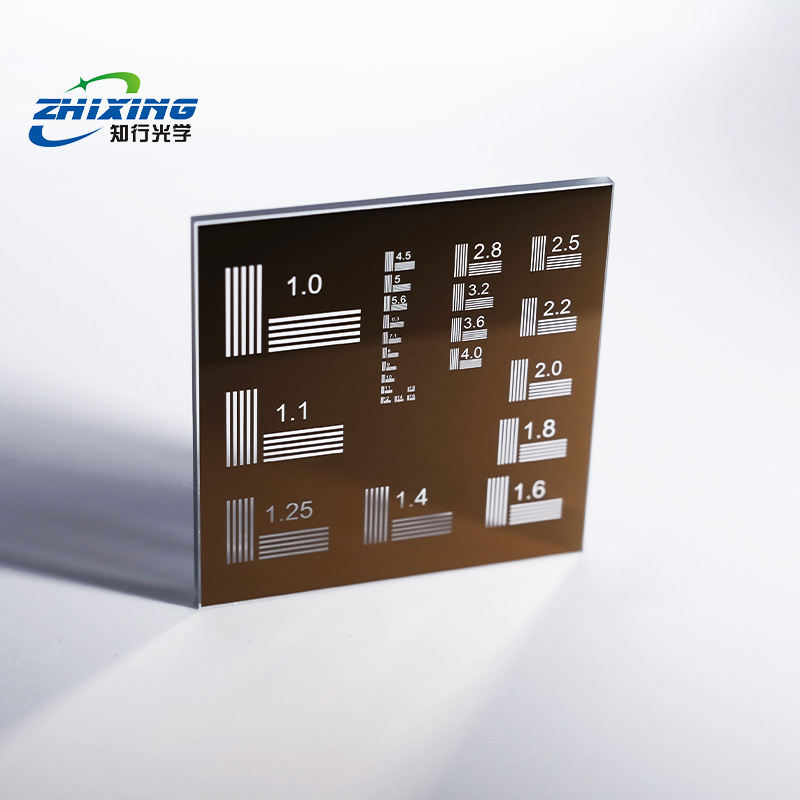
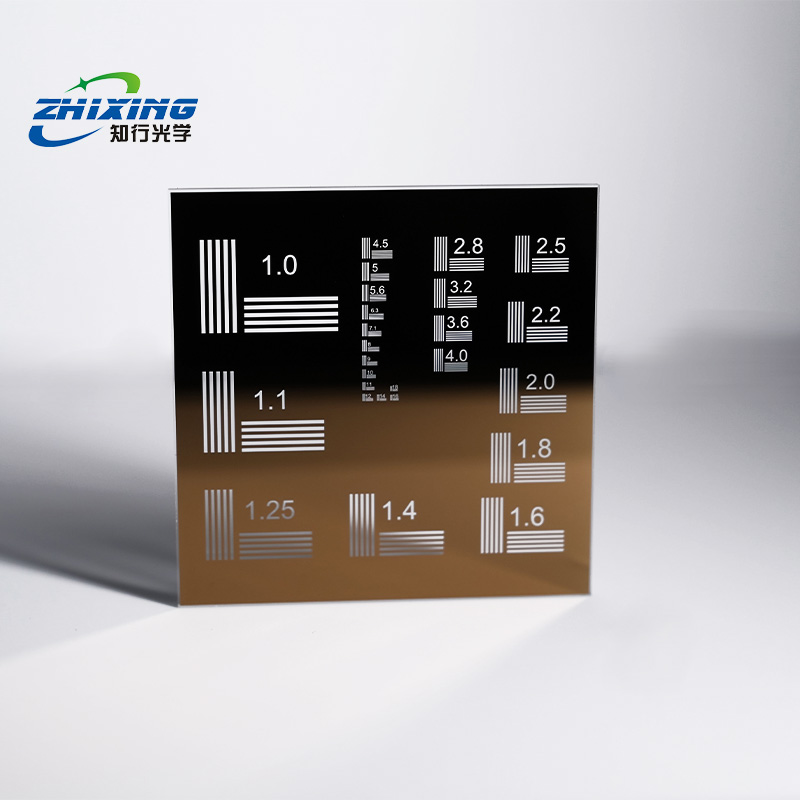
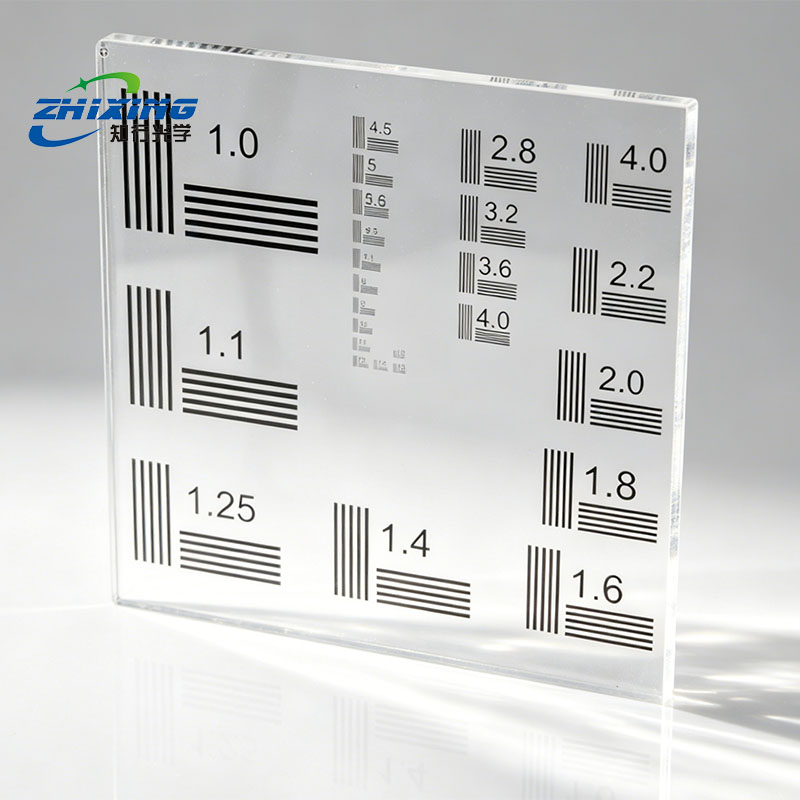
| Material Overview |
K9 Glass |
B270 Glass |
Fused Silica |
Soda-Lime Glass |
| Advantages |
• High surface flatness and excellent surface figure accuracy
• >90% light transmittance; suitable for transmission calibration
• Sharp and smooth pattern edges; easily achieves micron and sub-micron precision
• Clear imaging
|
• High surface flatness and excellent surface figure accuracy
• >90% light transmittance; suitable for transmission calibration
• Sharp and smooth pattern edges; easily achieves micron and sub-micron precision
• Clear imaging |
• High surface flatness and excellent surface figure accuracy
• >90% light transmittance; suitable for transmission calibration
• Sharp and smooth pattern edges; easily achieves micron and sub-micron precision
• Clear imaging
• Extremely low sensitivity to temperature and humidity variations |
• High surface flatness and excellent surface figure accuracy
• >90% light transmittance; suitable for transmission calibration
• Sharp and smooth pattern edges; easily achieves micron and sub-micron precision
• Clear imaging
|
| Disadvantages |
• Standard optical glass is brittle; prone to edge chipping and fracture upon impact
• Front illumination causes glare/reflections |
• Standard optical glass is brittle; prone to edge chipping and fracture upon impact
• Front illumination causes glare/reflections |
• Standard optical glass is brittle; prone to edge chipping and fracture upon impact
• Front illumination causes glare/reflections |
• Standard optical glass is brittle; prone to edge chipping and fracture upon impact
• Front illumination causes glare/reflections |
| Surface Process |
Chrome Plating |
Chrome Plating |
Chrome Plating |
Chrome Plating |
| Substrate Thickness |
2.3 mm (Tolerance: ±0.1 mm)
3 mm / 4.8 mm (Tolerance: ±0.2 mm)
7.8mm |
2.3 mm (Tolerance: ±0.1 mm)
3 mm / 4.8 mm (Tolerance: ±0.2 mm)
7.8mm |
2.3 mm (Tolerance: ±0.1 mm)
3 mm / 4.8 mm (Tolerance: ±0.2 mm)
7.8mm |
2.3 mm (Tolerance: ±0.1 mm)
3 mm / 4.8 mm (Tolerance: ±0.2 mm)
7.8mm |
| Surface Roughness (Ra) |
≤0.05 μm (Mirror Grade) |
≤0.05 μm (Mirror Grade) |
≤0.05 μm (Mirror Grade) |
≤0.05 μm (Mirror Grade) |
| Visible Light Transmittance |
85%–95% (Transparent) |
85%–95% (Transparent) |
85%–95% (Transparent) |
85%–95% (Transparent) |
| Coefficient of Thermal Expansion (CTE) |
K9:7.1 × 10⁻⁶/℃ |
B270:9.4 × 10⁻⁶/℃ |
Fused Silica: 5.0–5.5 × 10⁻⁷/℃ |
Soda-Lime: 8.5–9.5 × 10⁻⁶/℃ |
| Applicable Wavelength Range |
UV Region:
Only transmits near-UV (>350 nm); virtually opaque to deep UV (<300 nm).
IR Region:
IR cutoff at 2100–2200 nm; transmittance drops rapidly beyond this range.
Visible Region (400–760 nm):
Good transmittance. |
UV Region
Only transmits long-wave near-UV (>330 nm); virtually opaque below 300 nm. UV cutoff shifts toward longer wavelengths as thickness increases. Not suitable for UVB or deep-UV detection.
IR Region:
IR cutoff ~3050 nm. High and stable transmittance in the 780–2500 nm NIR band; gradual attenuation above 2500 nm.
Visible Region (400–760 nm)
Low-iron composition eliminates greenish tint; average visible transmittance 91%–92%. |
UV Region:
Transmits deep UV (down to 185 nm); ideal for UV light sources, lithography, and UV inspection.
IR Region:
Furthest IR cutoff (~3500 nm); higher and more stable NIR transmittance.
Visible Region (400–760 nm):
Slightly higher transmittance and lower dispersion. |
UV Region:
Earliest UV cutoff (~360 nm); essentially unsuitable for UV applications.
IR Region:
IR cutoff at 2100–2200 nm; transmittance drops rapidly beyond this range.
Visible Region (400–760 nm):
Good transmittance. |
| Hardness & Scratch Resistance |
Mohs 5.5–6; Prone to scratching |
Mohs 5.5–6; Prone to scratching |
Mohs 5.5–6; Prone to scratching |
Mohs 5.5–6; Prone to scratching |
| Optical Path Compatibility |
Transmission + Reflection |
Transmission + Reflection |
Transmission + Reflection |
Transmission + Reflection |
| Typical Applications |
High-precision lab calibration, microscopic vision, transmission calibration |
High-precision lab calibration, microscopic vision, transmission calibration |
High-precision lab calibration, microscopic vision, transmission calibration |
High-precision lab calibration, microscopic vision, transmission calibration |